The Ephesus is a most popular historical place in Turkey and high on every traveler’s things to do list.
Its dazzling marble-columned temples and colonnaded streets are every history buff’s dream, and there’s plenty more to do in the vicinity once you’ve finished rambling through the ruins.
Ephesus sits on the edge of the vibrant town of Selçuk, which has long been a favorite stop for independent travelers. With a castle, excellent museum, Byzantine basilica, and a Roman aqueduct running straight through the center, this little town may be overshadowed by the mammoth ruin next door but has plenty of sightseeing to offer those who choose to spend a few days here.
1. Explore The Ephesus City walls and gates
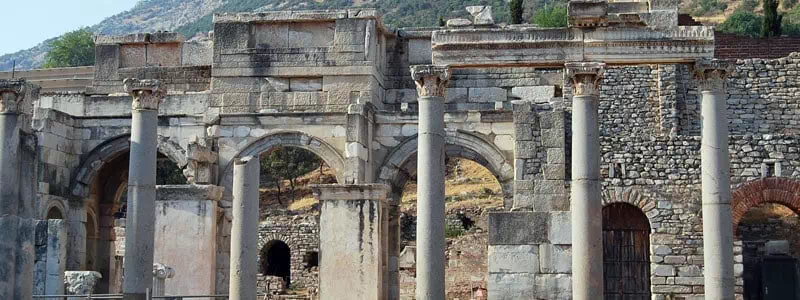
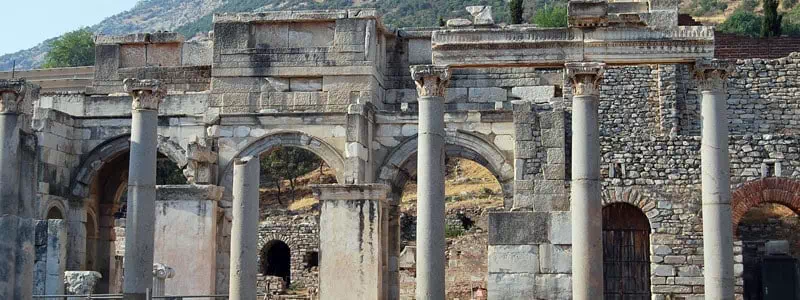
Because of their fertile land and favorable location, the Ephesians feared attacks and sieges of their city from very early in their history. The greatest danger lurked to the east, where the harbor of Ephesus was viewed as the so-called gateway to the west.
When Lysimachos, one of the generals of Alexander the Great, refounded the city in the third century BCE , he gave special attention to its defensive capabilities, and erected the massive city wall. Because of the excellent technique of their construction and masonry, these ruind are among the most beautiful examples from the Hellenistic age, although they have partially disappeared in the flatlands.
2. See the glory of Magnesian Gate Ephesus
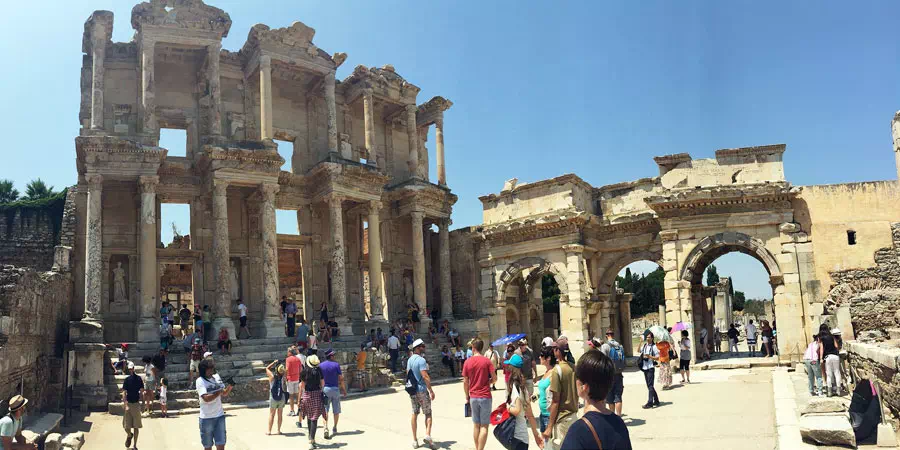
The Magnesian Gate, to the southeast of the city, was constructed in the third century BCE along with the city wall. The investigations around this gate, which are still in progress, have revealed that this gate was converted into a monumental gate with three entrances in the first century BCE
3. Smell history at Ephesus Odeon
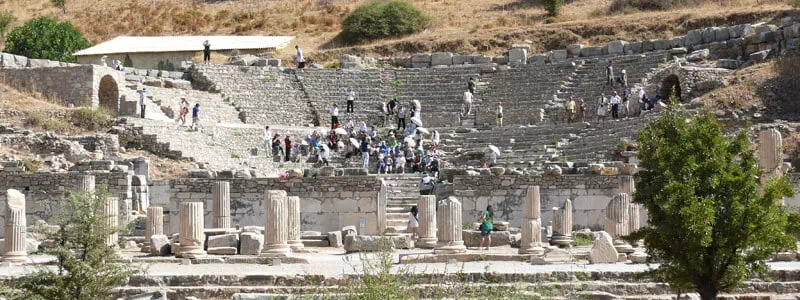
The odeon, built into the south slope of Panayır Dağı, is like a small theater. Its location north of the state agora and next to the prytaneion suggests that it also fulfilled the function of a bouleuterion (meeting place of the council of elders, or senate). An inscription tells us that Publius Vedius a Antoninus built the odeon in the middle of the second century CE.
4. Visit Basilica in Ephesus
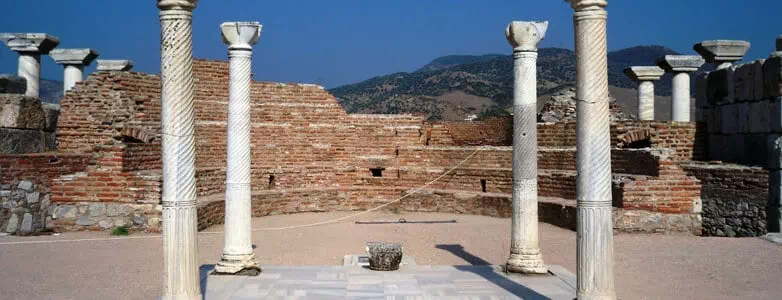
The three-aisled basilica, 165 meters long and dating from the first century CE, stands between the odeon and the state agora. It is a typical example of a Roman basilica. Its purpose was to foster trade, so it approximated the function of an exchange. Its location among government buildings such as the state agora, the prytaneion, and the odeon facilitated this role.
5. Visit Ephesus Prytaneion most important structure in the city
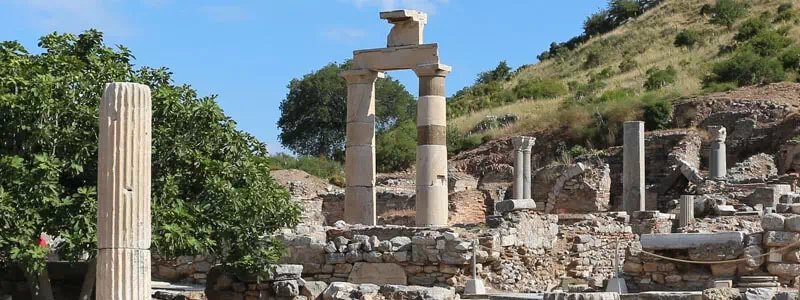
After the Temple of Artemis, the prytaneion, to the northwest of the state agora, was the most important structure in the city. The holy fire of Hestia burned continuously in it. The Ephesians held political discussions here, entertained official guest.
6. Take Photos at The gate of Hercules
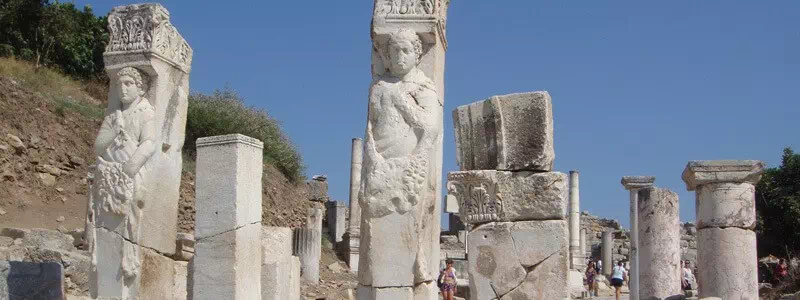
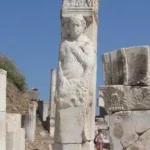
A monumental structure stands on Kouretes Street in front of its intersection with Domitian Street. Because it contains a relief of Herakles, it is called the “Gate of Hercules. The Gate of Hercules had two stories with a broad, arched passageway carried by six columns. Reliefs of Nike decorated both sides of the arch. Part of one of them can be seen on Domitian Street.
7. Visit Ephesus The Inscription Museum
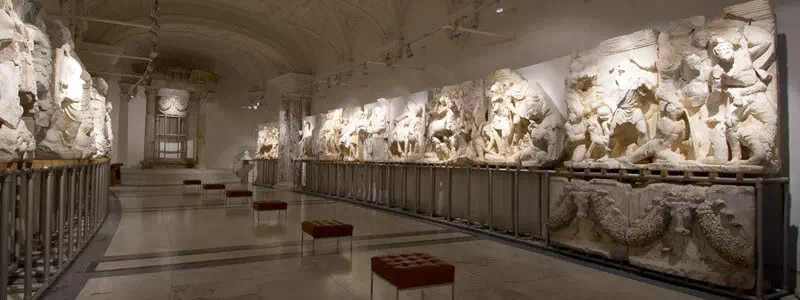
After archaeologists had concluded the excavations on the east side of the Temple of Domitian, they moved the inscribed blocks found in Ephesus that had historical value there. More than 2000 inscriptions have been found already. They give us evidence of the decisions taken by the council of elders and the assembly of citizens, honors awarded , verdicts rendered, and commands issued by emperors and kings.
8. Pray at The Temple of Artemis
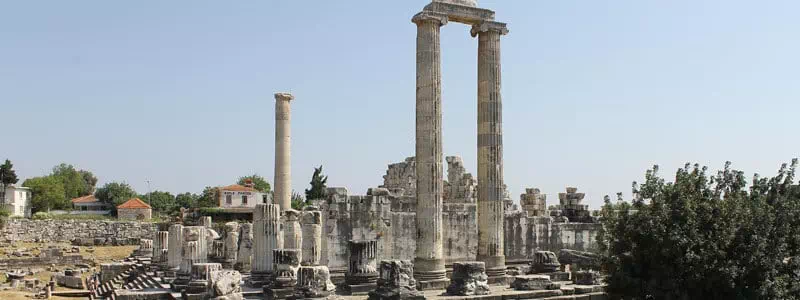
In the 560 BC. ,the city was under the siege of Croesus , the king of Lydia. The King granted a major source of funding in order to build the Temple of Artemis, which would unite the peoples in the area. The temple, carrying on the mother goddess cult that prevailed in this land since ancient times, attracted people of belief from all around the world to Ephesus for years .The Temple of Artemis is known as one of the Seven Wonders of the World.
9. Visit The Temples of Dea Roma and Divus Julius Caesar
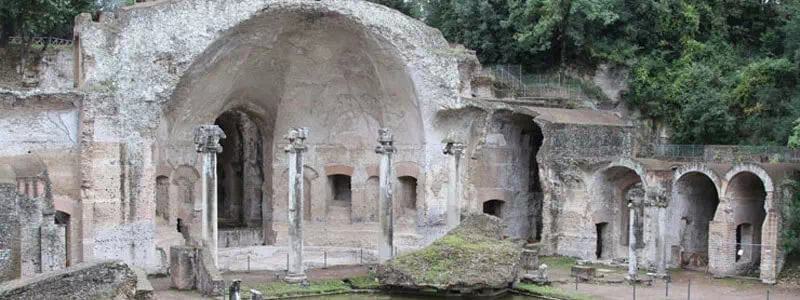
To the east of the prytaneion are two temples standing next to one another . Walls from later times all but obscure the original floor plan. They were prostyle temples in the lonic order. The facades face the south. When Augustus visited Ephesus in 29 BCE, he granted permission to build this neokoros (“temple warden”) temple. It was the first of its kind in Ephesus. One was dedicated to the goddess Roma (Dea Roma), and the other, to Augustus’s adoptive father, the divinized (Divus) Julius Caesar. During the Roman period, it was a great distinction for a city to receive the right to built an imperial “neakoros” temple. Thus , one finds these temples only in the most important cities, such as Ephesus, Pergamon, and Smyrna.
10. Walk on Ephesus Marble Road
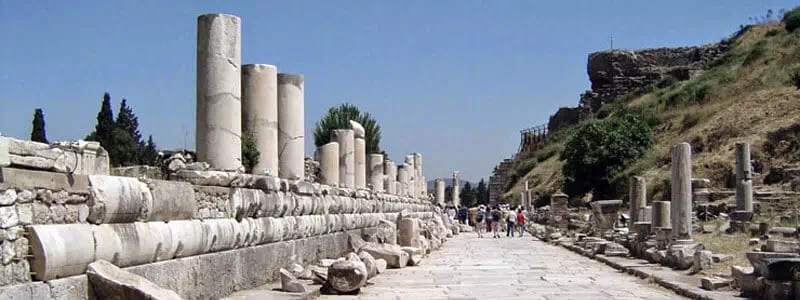
The marble road runs between the Library of Celsus and the theater, and is part of the sacred way, vvhich, from here, winds its way around Panayır Dağı. It is paved with large, level blocks of marble. On its eastem side, it was lined with a colonnade like those along the sides of Kouretes Street. In the west, the floor level of the colonnade was raised about two meters during the reign of Nero (54-68 CE), and it was converted into a stoa.
What might be an advertisement for the brothel was found on the narrow sidewalk on the Street side of the stoa. It has a female head, a left foot, a heart, and a Byzantine inscription.
Plan Your Visit with Acetes Travel
Reading about Things to do in Ephesus? See how Acetes Travel can make it part of your Istanbul itinerary — book direct, free cancellation, 24/7 WhatsApp support.
Explore the Ephesus Day Tour from Istanbul →